
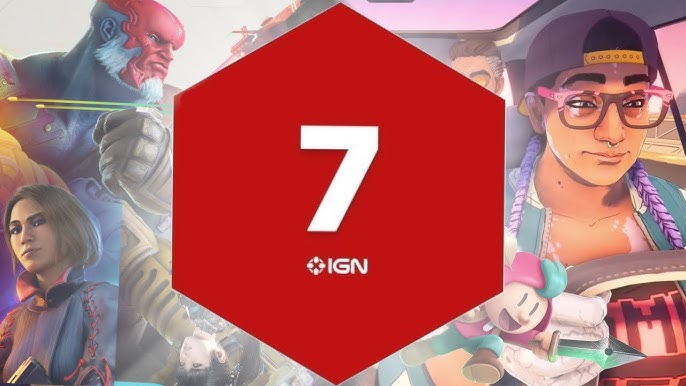
Why IGN Gave This Game 7/10 But Still Named It Best Game of the Year
At first glance, it sounds like a contradiction.
A major gaming outlet gives a game a 7/10 review score, then later names it Game of the Year. For many players, that feels inconsistent. If a game is truly the best of the year, shouldn't it have scored closer to a 9 or 10?
The reality is that review scores and Game of the Year awards follow different systems. Once you understand how gaming media works internally, the decision becomes easier to explain.
Let's break it down.
How IGN's Review Scores Actually Work
IGN uses a numerical scoring system that typically ranges from 1 to 10, where each number corresponds to a rating category such as:
| Score | Meaning |
|---|---|
| 10 | Masterpiece |
| 9 | Amazing |
| 8 | Great |
| 7 | Good |
| 6 | Okay |
A 7/10 rating doesn't mean a game is bad. According to IGN's scoring guide, it indicates a good game with noticeable flaws.
A reviewer may enjoy the experience overall while still pointing out issues like:
- technical bugs
- repetitive gameplay loops
- weak pacing
- performance problems at launch
Those factors can reduce the score even if the game has strong ideas.
Review Scores vs Game of the Year Awards
Here's the key point: the reviewer and the awards team are not always the same people.
Game reviews are typically written by one critic or a small review team. Their job is to evaluate a game at launch.
Game of the Year awards, however, are usually decided by a broader editorial group after the full year of releases.
That means two things can happen:
- A reviewer gives a game a moderate score due to launch issues
- Later, editors evaluate the overall impact of the game during the year
Those perspectives are not identical.
Why a 7/10 Game Could Still Win GOTY
There are several realistic reasons this happens.
1. The Game's Influence Grew Over Time
Some games improve dramatically after launch through patches and updates.
In that case, the original review reflects launch conditions, while the award reflects the full-year experience.
This has happened with several major titles that received updates or expansions months after release.
2. The Competition That Year Was Weak
Game of the Year is relative.
If the year lacks clear blockbuster titles, a game with flaws might still be the most memorable or innovative release.
Awards measure comparative impact, not just raw scores.
3. Innovation Matters More Than Polish
Some games introduce ideas that change the industry.
Even if execution isn't perfect, critics may recognize their importance.
Examples often cited in gaming journalism include titles that introduced:
- new multiplayer formats
- revolutionary mechanics
- genre-defining storytelling
Innovation can outweigh technical imperfections.
4. Review Scores Reflect a Single Perspective
A single review score represents one critic's viewpoint at a specific time.
Editorial awards represent group consensus after months of discussion.
Those outcomes can differ.
How Gaming Critics Evaluate "Best Game"
Gaming outlets often evaluate games using multiple factors beyond raw quality.
Typical criteria include:
- innovation
- cultural impact
- storytelling
- gameplay design
- community reception
A game that sparks discussion or shifts a genre forward may rank highly even if it isn't technically flawless.
A Simple Framework for Understanding Gaming Reviews
When reading game reviews, it helps to separate three layers.
Layer 1: Launch Review
Immediate experience with the game.
Layer 2: Community Response
Player reactions, updates, and
long-term engagement.
Layer 3: Industry Impact
How the game influences design
trends or gaming culture.
Game of the Year decisions usually focus more on layers two and three.
Common Mistakes Gamers Make When Reading Reviews
Treating scores as objective facts
Review scores are critical
opinions, not universal truths.
Ignoring context
Launch bugs or missing features can affect a
score but may be fixed later.
Comparing scores across different reviewers
Different critics use
slightly different standards.
FAQ
No. In IGN's scale, a 7 means a good game with noticeable flaws, not a poor one.
Typically an editorial team rather than the individual reviewer who scored the game.
Usually not. Reviews reflect the game at launch, although follow-up coverage may discuss updates.
Not always. Many outlets consider broader factors such as influence, innovation, and cultural impact.
Sometimes yes, sometimes no. Player-voted awards and critic awards often differ.
Conclusion
The apparent contradiction between a 7/10 review score and a Game of the Year award highlights how gaming criticism works.
Reviews capture a game at a specific moment, while awards evaluate the bigger picture after the entire year unfolds.
Understanding that distinction helps explain why the two outcomes don't always match.
Next step: when reading game reviews, focus less on the number and more on the reasoning behind the critique. That context tells you far more than the score.